
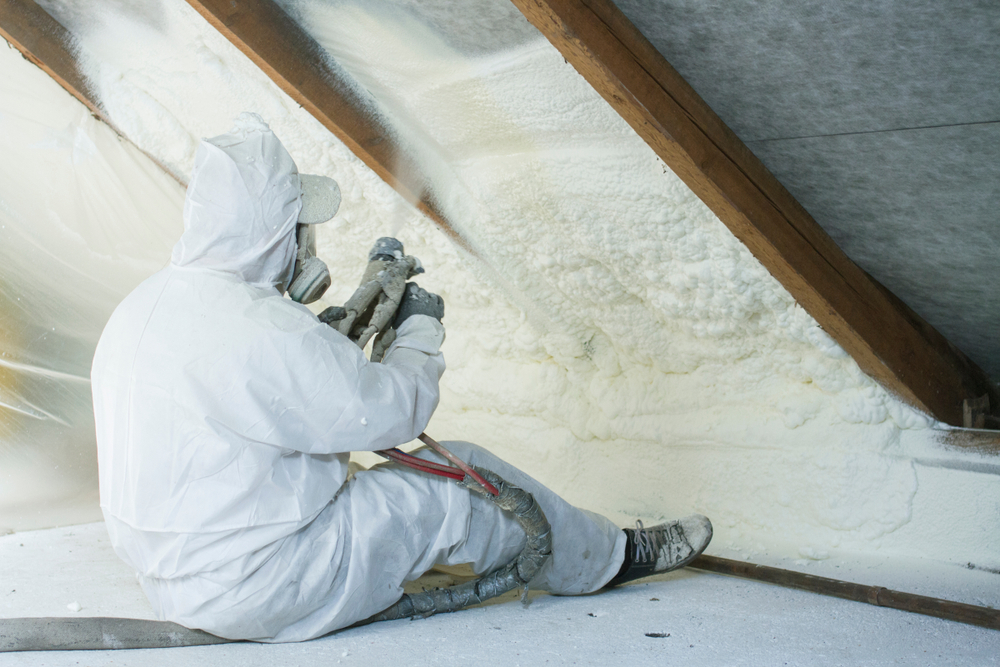


Worried about your spray foam loft insulation? New advice for homeowners.
A new consumer guide to help homeowners decide what to do – and what not to do – if they have spray foam insultation in their lofts, has been launched by a national property organisation.
The advice, issued by the Property Care Association, follows a report by the BBC suggesting that a quarter of the UK’s biggest mortgage providers will not lend on homes with spray foam insulation installed.
It has also been compiled in response to a reported increase in ‘rogue’ insulation removal operators exploiting homeowners who are worried about how their spray foam insulation has been applied.
This includes offering to remove the insulation for an extortionate price and using high pressure selling techniques.
What’s the problem with spray foam insulation?
At least 250,000 homeowners in the UK have spray foam loft insulation with much of it installed under the previous government's Green Homes Grant scheme.
Some lenders are currently rejecting requests for mortgages on homes where it is present with a growing number of people reporting difficulties selling, taking out a mortgage or releasing equity from properties insulated in this way.
Generally, problems arise if the spray foam insulation was added as a retrofit (after the property was built) measure. If it was included in the construction of a new build property, it should meet the appropriate standards and may not need removing.
Why don’t mortgage lenders like spray foam loft insulation?
Spray foam insulation is a chemical product applied using powered sprays. The foam then expands and turns into a solid coating which insulates roofs, lofts, walls and floors.
There are two types – open-cell spray foam insulation and close-cell spray with far more problems associated with the latter as it doesn’t allow timbers to breathe as open-cell foam insulation does.
When used in roofs and lofts it can eventually trap moisture around wooden joints which can lead to rotting. The hardened foam can also warp wooden beams as well as create mould and release toxic vapours.
Sometimes, improper installation including over spraying, using the wrong spray type for the property or the wrong thickness, creates problems which can invalidate the product warranty.
Because it is so difficult to remove, many mortgage providers and equity release companies refuse to lend on homes with this type of loft insulation, even when it’s been installed by a reputable firm.
What does the new spray foam loft insulation guidance say?
The guidance has been produced by a group of organisations including the Property Care Association (PCA), the Residential Property Surveyors Association (RPSA), the Insulation Manufacturers Association and Bangor University.
With so much bad press around spray foam insulation, it stresses the importance of taking reputable advice from an appropriate professional before making a decision on removal. If you aren’t looking to move or release equity, you may not need to do anything.
It details how to check your spray foam insulation, depending on whether you have a complete handover pack from the installer or not, before deciding what steps to take.
Crucially, the advice also stresses the importance of not accepting cold call offers to have your spray foam insulation removed, never being rushed into a decision, getting comparable quotes and never paying for work in advance.
Click here to read the PCA’s short guide.
What else can you do if the property you want to sell has spray foam insulation?
Make sure you:
- Have all your paperwork and any guarantees as lenders will want to see if you have open-cell or close-cell spray foam insulation and which company applied it.
- Do not try to remove it yourself.
- Check what insulation you have. Some lifetime mortgage lenders will consider properties with open-cell spray foam if it has been applied during construction, is what’s known as the ‘Icynene’ product and has a guarantee and BBA (British Board of Agreement) approval.
Get in touch
Wards Solicitors wins high praise in the 2025 edition of the independent Legal 500 guide of outstanding legal professionals for its exceptional professional service standards and high levels of technical expertise.
We are also Bristol Law Society’s Regional Law Firm of the Year.
Our expert and highly regarded Conveyancing Team works across all 13 of our local offices in Bristol, South Gloucestershire, Bath and North East Somerset and North Somerset. Please don’t hesitate to get in contact.